
Northern Culture ‘Untapped’ Report Launch
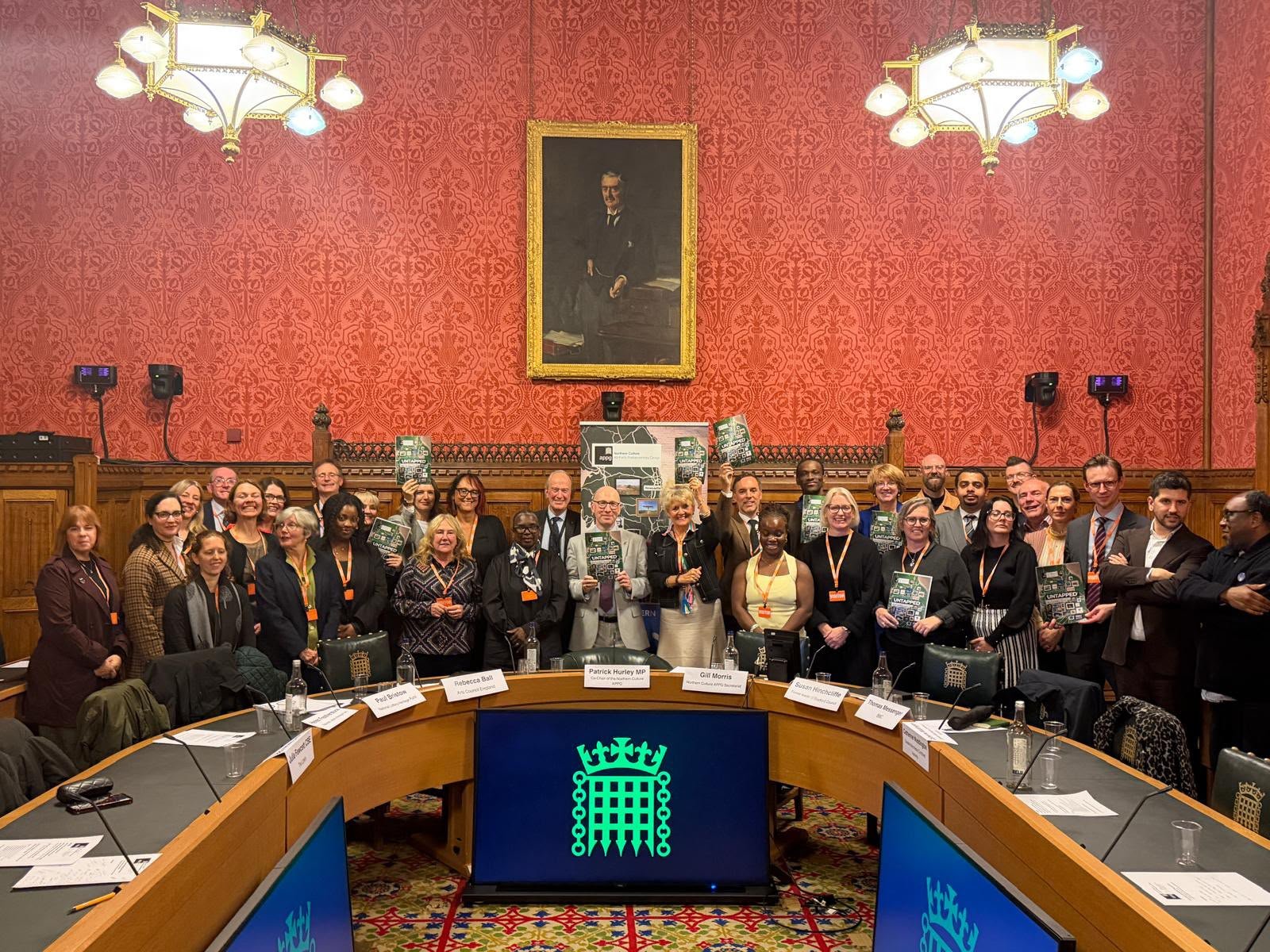
On Monday 26th October, the Northern Culture APPG hosted the official launch of its landmark report and recommendations for the ‘Northern Culture Untapped’ inquiry, bringing together cultural leaders, regional policymakers, and parliamentarians to unveil a strategic roadmap for realising the true value of the North’s cultural capital.
The Report Launch
The launch of the ‘Northern Culture Untapped’ report marks a crucial turning point for cultural policy across the North. Arriving a decade into the devolution journey and amidst ongoing national discussions around regional growth and public spending, the report delivers an evidence-based call to action: moving away from viewing culture as a discretionary extra, and instead establishing it as vital infrastructure and a major national asset.
Chaired by Patrick Hurley MP, Chair of the Northern Culture APPG, the session opened with contributions from leading figures across the sector, including:
Rebecca Ball, Area Director North, Arts Council England
Paul Bristow, Director, National Lottery Heritage Fund
Helen Featherstone, Director England North, National Lottery Heritage Fund
Julia Fawcett CBE, Chief Executive, The Lowry
Susan Hinchcliffe, Former Leader of Bradford Council
Tom Messenger, Head of Political and Parliamentary Engagement, BBC
Catherine Waddington, Principal, Culture & Heritage, Greater Manchester Combined Authority (GMCA)
Gill Morris, Founder, Devo Agency and APPG Secretariat
Panellists examined how stable public investment serves as a catalyst for wider economic and social growth, pointing to proven transformations such as MediaCityUK in Salford and Bradford’s City of Culture journey. Speakers highlighted that cultural investment cannot exist in a vacuum; to unlock its full potential, it must be integrated with broader policy levers such as regional transport networks, local skills strategies, and night-time infrastructure.
The session was attended by MPs and Peers from across the North, including:
Julie Minns, MP for Carlisle
Lord Watts
Lord Hunt
Parliamentarians and attendees engaged in a wide-ranging discussions which addressed how the report's recommendations can be driven into cross-party action, the role of cultural philanthropy, tackling spatial inequalities, and ensuring cultural infrastructure reaches young people in rural, coastal, and outer-urban communities.
Key Messages
Northern culture is a national asset, not a rescue case: Culture generates substantial economic and social dividends. Decades of evidence show that stable public investment de-risks cultural projects, builds civic confidence, and attracts substantial private and philanthropic co-investment.
Culture requires joined-up infrastructure: Cultural policy cannot succeed in a silo. A thriving creative ecology depends on integrating culture with wider public levers—such as cross-border transport, local education, affordable late-night transit, and workforce skills pipelines.
Devolution and arms-length bodies must work in tandem: Devolved regional governance offers a powerful mechanism to connect cultural funding directly to communities, but must be paired with strong national institutions, local government support, and pan-Northern collaboration.
Addressing spatial inequality and rural access: The benefits of the cultural economy must be felt across every postcode. National and regional strategies must ensure smaller towns, coastal hubs, and rural areas have equal access to cultural capital and talent pipelines rather than focusing exclusively on core metropolitan centres.
Moving from evidence to cross-party delivery: The publication of the report is the beginning of the work, not the end. Delivering long-term change requires persistent, cross-party momentum to embed culture into regional and national industrial strategies ahead of 2030.
