
Is it time to reimagine how we ‘do’ culture? Inquiry Session 4
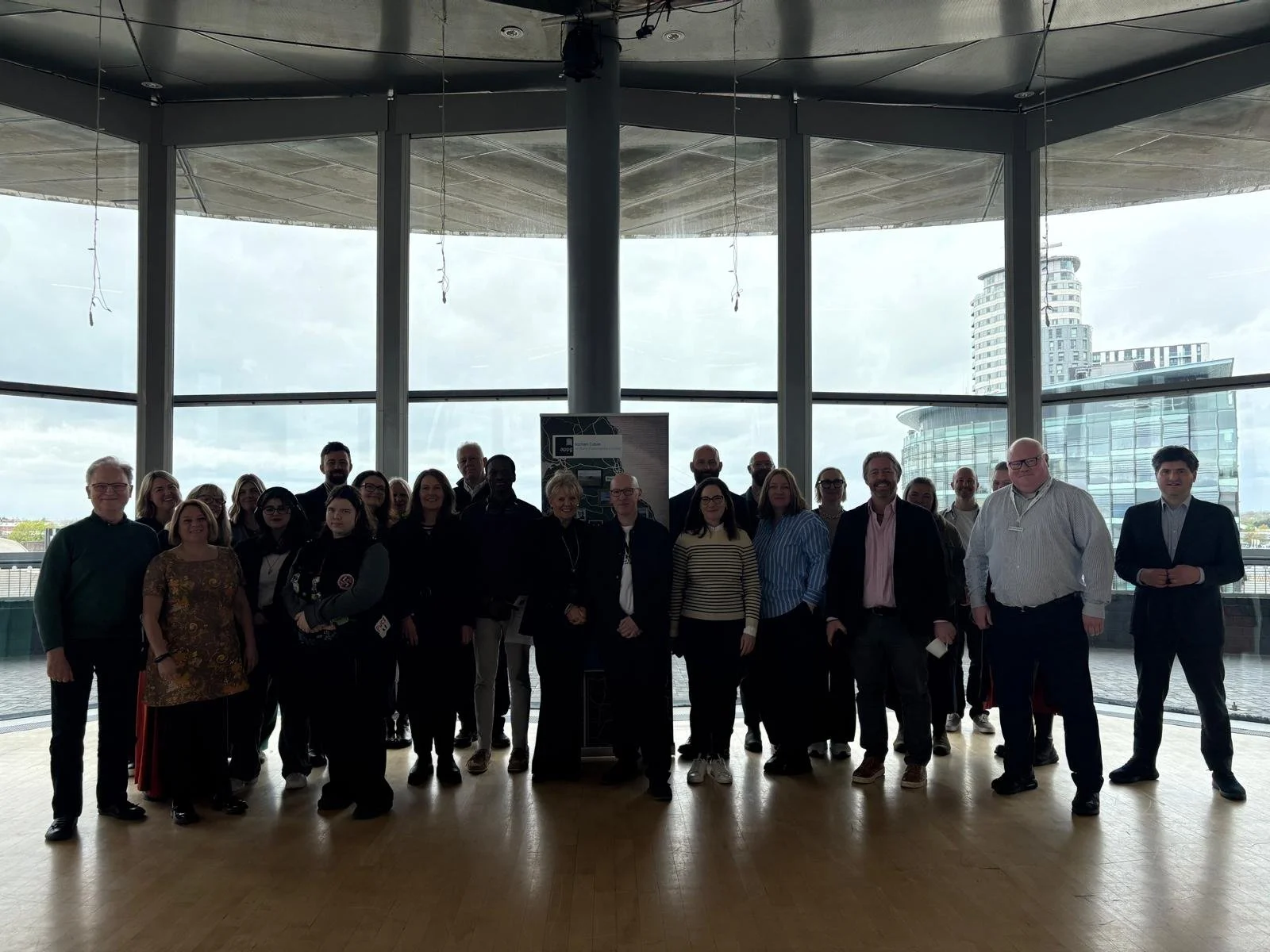
On Friday 17th April, the Northern Culture APPG held its final ‘Untapped’ inquiry session at the Lowry, Salford to zoom out on whether it’s time we reimagine how we ‘do’ culture…
The Evidence Session
The morning saw the Inquiry session hosted at the Lowry, Salford, a nationally recognised institution that has catalysed cultural regeneration throughout Salford - celebrating it’s 25th anniversary in 2026. The final inquiry session was joined by a wide range of speakers from across politics, cinema, arts, media and private capital, including:
Heidi Dawson, Head of BBC North
Sam Ingleson, Associate Dean of Knowledge Exchange in School of Arts, Media and Creative Tech, University of Salford
Catharine Des Forges, Director, Independent Cinema Office
Michael Wilkinson, Opera North
Tony Sophoclides, Strategic Affairs Director, UK Hospitality
Karim Palant, Director of External Affairs, UK Private Capital
Our oral evidence session particularly highlighted the need for greater culture, creative industries, skills, and education to operate as a single, joined-up ecosystem - and that cities and regions across the North should not have to compete with one another to make this happen. Public transport was also a key point of consensus throughout the session, with a focus on the need for much greater and more flexible transport links to increase cultural footfall.
Salford City Mayor, Paul Dennett, also highlighted in his keynote speech that culture must be seen as civic and economic infrastructure, and ensure that cultural growth must seek to address pervasive inequalities at the same time.
The Tour
Joined by Salford MP Rebecca Long-Bailey and Northern Culture APPG Co-Chair Patrick Hurley MP, the afternoon tour began it’s tour at the Lowry, seeing their immersive Lowry360 experience of L.S Lowry’s famous 1953 ‘Going to the Match’ painting of the former industrial landscape. The tour also saw the Lowry’s famous lyric theatre, which is one of the largest outside of London in the UK.
The tour then headed to Salford University’s MediaCityUK campus, seeing first-hand their production studios, journalism workshops, design labs and sound studios - all of which support and promote the key skills to sustain and grow the North’s talent pipeline.
Key messages from the session
We need to treat culture as civic and economic infrastructure - not just as a discretionary service or as something we only turn to when everything else fails
Culture and the creative industries work best when they're treated as a single connected ecosystem and not a separate policy domains
Access to culture could become a postcode lottery shaped by the priorities or resources of whichever combined authority you just happen to live in without centralised funding for organisations whose footprint crosses regional boundaries.
Any serious strategy for widening cultural participation in the north needs to take transport seriously
What we really need is a kind of joined up, intelligent thinking, about bringing things together and understanding they all are interdependent.
British tourism is very much driven by the culture and cultures that we have around.The government has recognised and the previous government recognised too, that far too much of the tourism that we attract is the south southeast and not enough of it comes north - where there is an incredible offer on show.
There is huge growth opportunity if we can sell the North of England to institutional investors around the world and use our industry to do that.
Culture cuts across the horizontal of all of the different verticals in government - we need to ensure that we're not just talking from sort of DCMS perspective here but that transport is crucial to the growth of the creative sectors but the creative sector is also crucial for skills and education.
