
Should Northern Mayors have more power to untap cultural capital? Inquiry Evidence Session 3
MONDAY 23RD MARCH
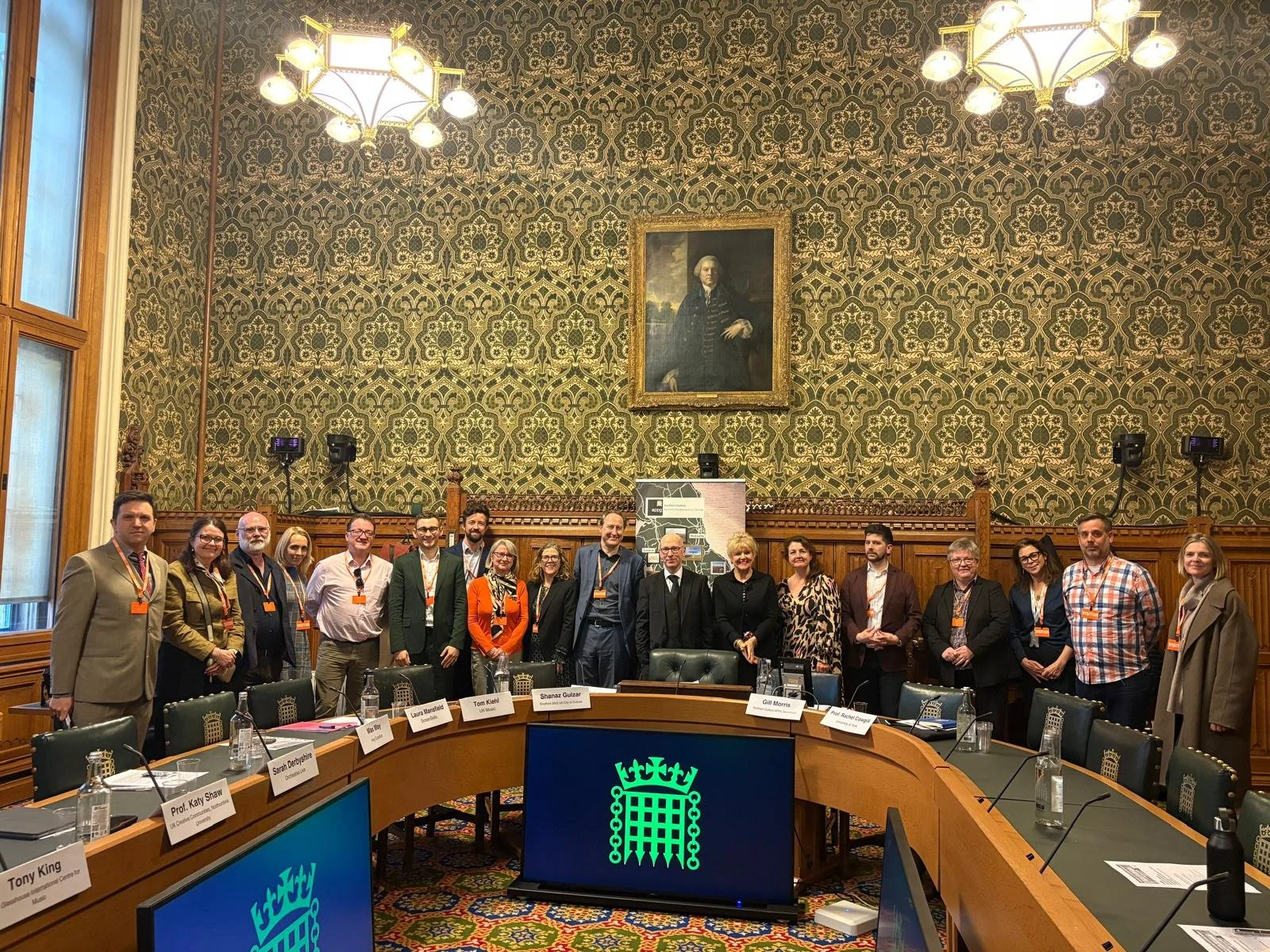
On Monday the 23rd of March, the Northern Culture ‘untapped’ inquiry held it’s third session in Parliament to answer the question: “Should northern mayors be given more power to untap cultural capital?”
The Inquiry Session
The third oral evidence session of the Northern Culture APPG’s Untapped inquiry focused on whether Northern Mayors should have greater powers to unlock cultural capital, and what this means in practice for growth, governance and place-based development.
The session brought together a panel of cultural, policy and industry experts to explore how culture is currently understood within devolution frameworks, the risks of fragmentation, and the opportunities for stronger regional leadership.
The session was chaired by Patrick Hurley MP, attended by parlimentarians such as Lord Liddle, and Regional Leaders such as Mayor for South Yorkshire Oliver Coppard.
The session heard evidence from:
Tom Kiehl, UK Music
Max May, Hey Creative
Laura Mansfield, ScreenSkills
Tony King, The Glasshouse International Centre for Music.
Sarah Derbyshire, Orchestra's Live
Professor Katy Shaw, Northumbria University, UK Creative Communities
The panel agreed that culture must be treated as a core driver of growth, not a discretionary add-on. While greater mayoral powers could unlock cultural potential, delivery must be consistent, and priorities for different leaders could risk fragmentation.
Speakers highlighted key barriers including short term funding, underinvestment in rural and coatal areas, and limited access for young people, calling for more place-based and coordinated approaches.
Parliamentarians emphasised the importance of supporting grassroots organisations and directing funding to local organisations. They also reinforced that culture should sit at the heart of regional growth and identity, not on the sidelines.
Key Messages
Culture should be treated as economic and civic infrastructure, not as a discretionary or “nice to have” activity.
Devolution offers an opportunity to better align culture with growth, but greater powers alone are not sufficient without a clear strategic framework.
There is a risk of fragmentation and inconsistency where cultural priorities depend on individual mayoral leadership.
A balanced approach between national expertise and regional leadership is essential to avoid a loss of coordination and capability.
Cultural policy must better reflect the needs of rural, coastal and smaller towns, not just major cities.
Access and participation, particularly for young people, must be central to cultural strategy, with transport and connectivity playing a key role.
Stronger collaboration across sectors and regions is needed to unlock the full potential of the North’s cultural ecosystem.
Ultimately, unlocking cultural capital depends on embedding culture within long-term growth strategies, not treating it as an add-on.
